



March 31, 2026 was my last day on the board of San Francisco’s iconic Roxie Theater, marking the end of a six-and-a-half-year run of what I’m calling “Peak Board.” I left the party while still having fun out of respect for term limits and a desire to model a good departure, which I fear is rare, resulting in stuck, stale, and crusty ol’ boards. While the entirety of my term wasn’t all rainbows and unicorns – six and a half years of anything features inevitable highs and lows – the overall experience was so rewarding I’d feel remiss if I didn’t commit to pixels some reflections on what made it so great. Lessons I can try to carry forward into future board service and that maybe will help your organization, too.
Some context. I joined my first nonprofit board in 2005 and have sat on at least one every year since. I’ve also developed relationships with a lot of nonprofit organizations over those twenty years and have come to appreciate board power, both for better and for worse. The outside observer usually can’t discern a board’s impact; most of the time, all we see is a list of names on a web site or slide on screen before a movie plays. But behind the scenes that group is rowing in the same direction (or not), fundraising (or not), supporting the leadership team (or not), shepherding strategy (or not), stewarding finances (or not). My working hypothesis is that if an org appears chaotic or troubled over a period of time, there’s likely some rot on the board. And without changing how it operates and/or who holds those seats, the organization doesn’t have a shot at a healthier future. A great board helps a nonprofit soar; a bad one sinks it, or worse, subjects it to an agonizing multi-decade slog.
A lot of great resources out there spell out the nitty-gritty of nonprofit board operations; this is intended to serve as a companion to those technical guides. These reflections are set within the context of a range of experiences, both in and outside of the film world. I talk about myself a lot, not because I think I’m the be-all-end-all, but because my actions are the only ones I am qualified to share. Final and most important preamble: Roxie Peak Board would not have been possible without of the rock star Executive Director, Lex Sloan, and the dedicated, talented Roxie Theater staff.
Good governance is the unsexy key to happiness.
Governance provides the structure within which to do the actual work. Without committee charters; clear term limits and processes for member recruitment and off-boarding; and annual calendars and goals, a board is a chaotic body of individuals all wondering what it should be doing and when that blow-hard who sucks all the energy out of every meeting will finally shut up. So many people serve on boards with lousy governance they come to think that’s just how it is; I’m here to tell you it doesn’t have to be that way.
Once upon a time the Stanford Law Clinic provided an invaluable resource: whippersnapper law students who conducted free governance audits for local nonprofits. I’ve sat on two boards who availed themselves of this game-changing opportunity. The team reviewed all of our documents, issued a report detailing our strengths and gaps, and offered a treasure trove of recommendations and templates to get ourselves on track. The third-party perspective (and, in this case, packaged in an elite brand) was key to the board’s acceptance and adoption. A power-hungry board chair wasn’t telling people what to do; rather, an objective expert offered a set of industry standards and best practices designed to make us better. I’m not sure Stanford offers the program anymore, but if you can scrape together the fees for a consultant I do think it’s worth hiring an outside firm to conduct this work.
Knowing how to meaningfully contribute, and being acknowledged for it, calms the nervous system.
Once solid governance is in place, board members have a baseline set of marching orders to follow. I think a lot of unproductive board behavior arises from a purpose vacuum: if someone isn’t sure what they’re supposed to do, they’ll make it up. The contribution of time, talent, ties, and treasure looks different for each board member, and it’s the job of the chair/exec committee, in partnership with the executive director, to cultivate it. It’s an ever-present activity, requiring leadership to keep the antennae up for what needs to be done when, and who might be best suited to pitch in.
I witnessed this dynamic on steroids during the Forever Roxie capital campaign. Raising $7 million in three years with no permanent specialized fundraising staff required all fourteen (and, for a time, twenty-one) board members supercharge to hit an audacious goal. Some were fired up to fundraise; others less comfortable asking for money. Some had enough time to put additional ad-hoc committee meetings in their weekly calendar and meet with building inspectors on site; others helped design fundraising decks after work and when the kids were in bed. Everyone personally contributed funds to the campaign so we could brag about 100% board participation. Not everyone could put the pedal to the medal for two years1 straight, but everyone did play a meaningful role how and when they could. Witnessing each person kick into high gear and contribute to a grand goal was one of the greatest joys of my time on that board.
I’m a big believer in positive reinforcement, so for the three-ish years I was board co-chair, I made a point of thanking people, publicly, as often as possible, for a wide array of participation. I did this, of course, to make sure the recipient knew their work mattered, but also as a signal to the rest of the board of the kind of behavior that was valued and encouraged.
Remember: everyone is a volunteer.
This is another reason I am so big on public gratitude. Everyone signs up for this gig on top of day jobs, family life and myriad other obligations. No one is forced to be there; no paycheck being earned. So you compensate people with warm fuzzies and by valuing their time. Start and end meetings promptly and make them meaningful. Use that time to do the things only that body of people can do, together.
Assume everyone does the homework. A written agenda can be not just a guide for what needs to be done, but also how it will be accomplished. At The Roxie we included icons to tag items as a “vote,” “discussion,” and “action” to preview our work and to aid facilitation. Abolish the committee report-out; as an adult A++ student, I can’t tell you how infuriating it is to do the pre-reading and then spend the bulk of a two-hour Zoom on the same material for the benefit of the slackers who didn’t prepare. Positive peer pressure your colleagues into reviewing the deck in advance; eventually, they’ll grow tired of not being able to fully participate and get hip to the program.
Learning isn’t linear, and takes time.
I’m not the only one who joins a new board because it represents a learning opportunity; the ideal candidate brings a mix of relevant skills and experiences and curiosity and fresh perspective to the mix. Sometimes the learning lies within the organization’s sector (for example, an employment attorney who is new to documentary film) or with board service itself (i.e. it’s their first board). So just as each person’s contribution is unique and will ebb and flow over the course of their tenure, so is their learning journey. It’s a two-way street, of course: the individual is responsible to clearly articulate what, specifically, they want to learn, while the leadership provides the resources at their disposal to facilitate it – and to check in periodically to see how things are going.
Over the course of a board tenure, it’s likely everyone will make a blunder or two. I sure did; for example, as Roxie board co-chair I co-opted an existing committee by creating a new, redundant, one without consulting the standing chair or even inviting them onto the new committee! So embarrassing! It was an oversight born from inexperience, enthusiasm, and urgency. Thankfully, after a heartfelt apology and a rejiggering of committees, we put the damage in the rear view mirror and got back to work. I’m still grateful for the grace that my colleagues showed me, accepting my apology and not holding a grudge. Obviously if someone’s behavior runs afoul of the law or otherwise violates the bylaws, more punitive action is necessary. But most of the time I assume best intentions, focus on the positive, and give people a chance to evolve. It pays dividends in the long run. And, remember, if you have term limits you have a built-in exit ramp for people who are simply not a good fit.
Have fun!
Again, no one’s raking in the big bucks on nonprofit boards, so we might as well inject some fun into the experience. Are you laughing together? Can you be a little goofy sometimes? If you’re meeting in person, will someone bring cupcakes? Celebrate wins, mark milestones, sing Happy Birthday.
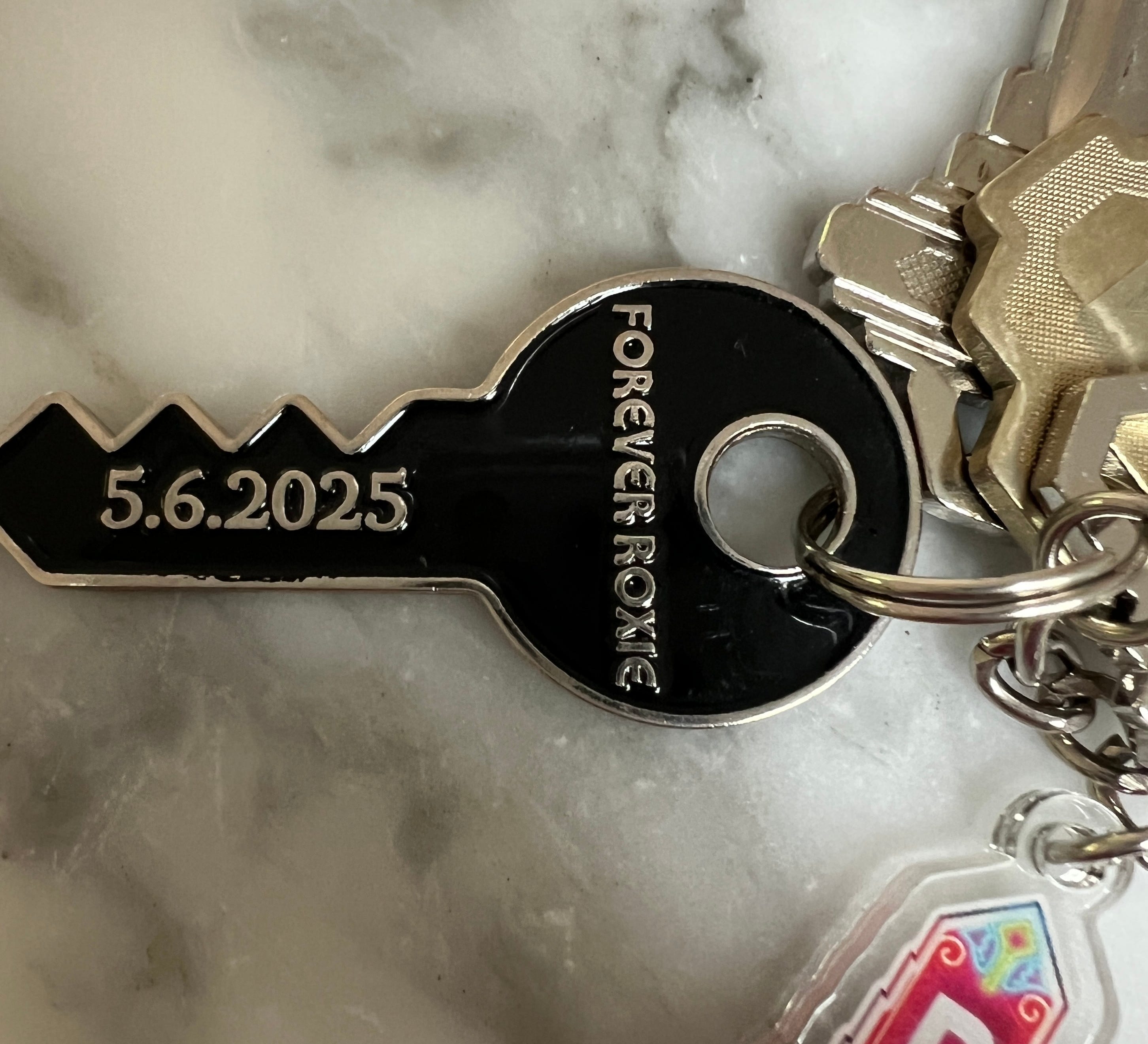
I love merch. The Roxie has amazing merch, and board members rolling around San Francisco carring a Roxie tote or sporting their Roxie beanie at Sundance is a fun way to proudly spread the joy. After we closed escrow on the building purchase, Lex and I conspired to create commemorative key chains in the shape of a key with the closing date on it to hand out to every board and staff member. I put each key in a box, tied it with colorful ribbon, and placed them around the table at the next board meeting as a surprise. Cheesy? You betcha. Worth it? Absolutely. I carry that memento with me to this day, and every time I peep it on my keychain I feel a little surge of happiness and pride.
I’ll wrap this up here with one final thought: The care and feeding of the board is the job of the board. Too many already overstretched executive directors are doing work the board could and should do for itself. I’m not suggesting you shut the ED out, but if they’re drafting your emails to send to your committee to remind them of your upcoming meeting so you send it on time…. C’mon. Culture is King: if your board culture sucks, it’s your responsibility – and within your power – to fix it.
I used to think in terms of a nonprofit board rule of thirds: A third of the board does everything, a third does nothing, and a third dips in and out based on interest and capacity. The Roxie board blew up that assumption. With strong governance, clear communication, and joyous culture you’ll be amazed at what you can accomplish and the fun you’ll have along the way.
That’s right: two years. We met the goal a year early — go us!
So great to hear about a great board experience. I wish more people talked about the joys in addition to the headaches. Also/ I loved going to the Roxy when I lived in SF decades ago so I’m glad it’s in wonderful hands.